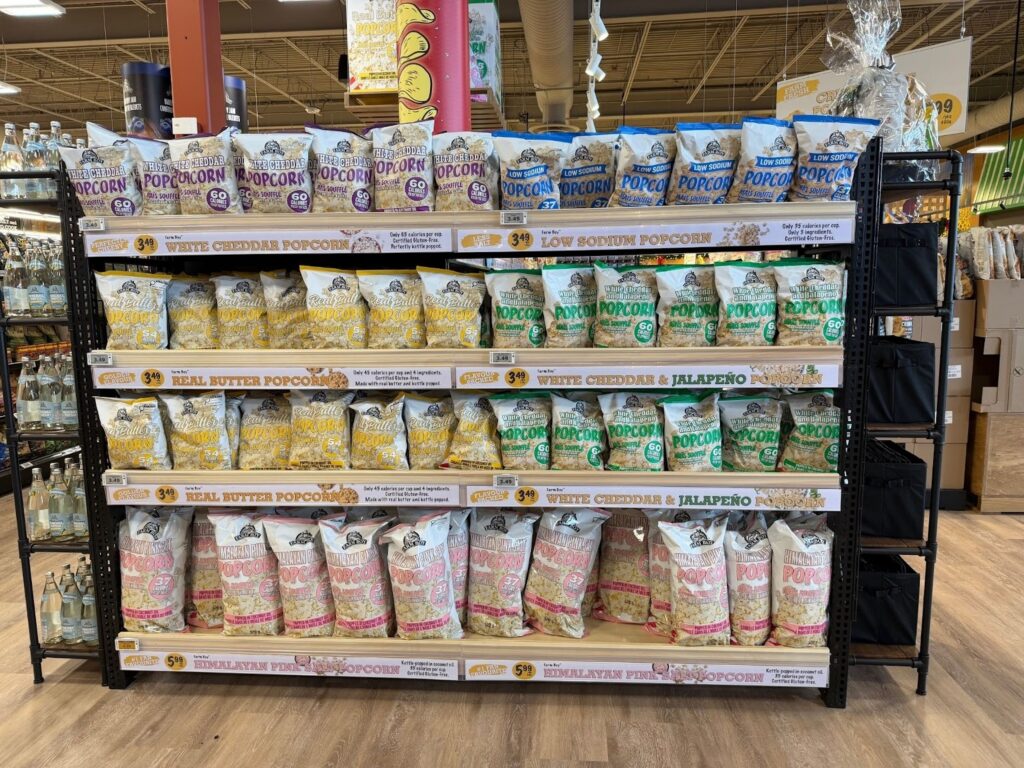
You’re halfway through a promo reset. The old pricing is coming down, the new tags are stacked on a cart, and the clock is already working against you. Someone taped a shelf talker slightly crooked last week, another tag is peeling because the adhesive gave up overnight, and now customers are stopping to ask whether the price on the shelf actually matches the product above it.
This is the moment where shelf-edge systems either save the day—or quietly drain hours from your team.
Shelf data strips and ESL rails exist for this exact problem. Not as decorative add-ons, and not as “nice-to-have” hardware, but as a fixed system that removes friction from daily pricing, promos, and resets. When they’re chosen and installed correctly, they stop the small issues that snowball into lost time, mispricing, and shopper hesitation.
Below, we’ll walk through what these systems actually do, when each one makes sense, and why the difference between “generic” and “purpose-built” shelf-edge hardware shows up so clearly on the sales floor.
What Shelf Data Strips Actually Do for Your Store Layout
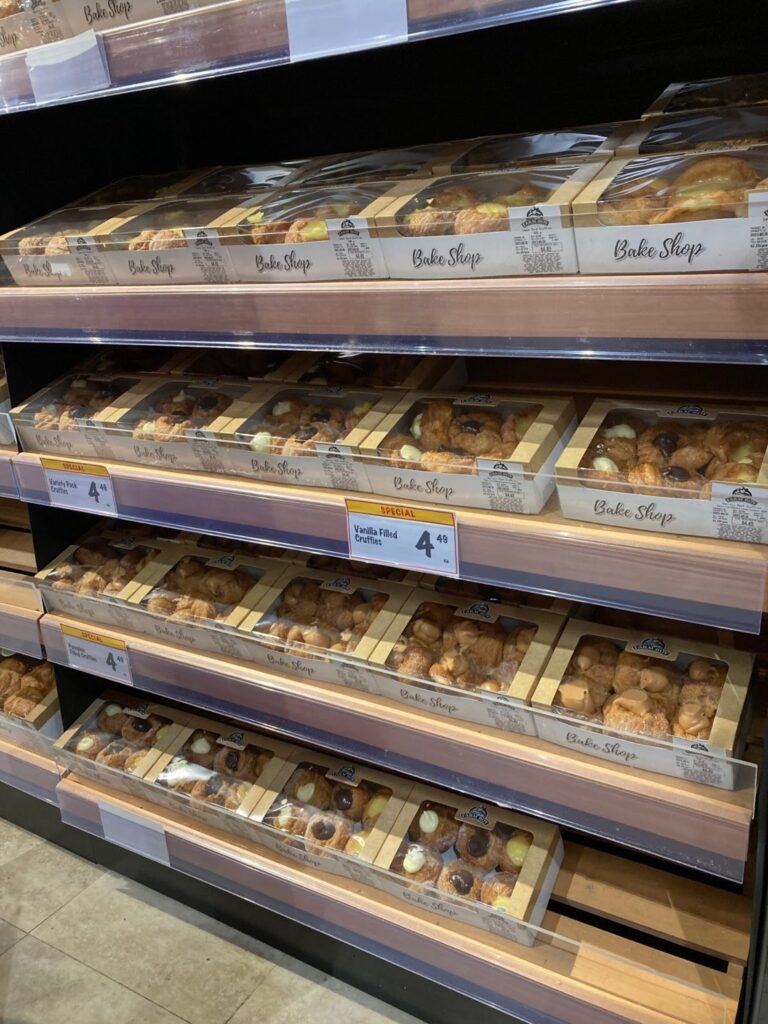
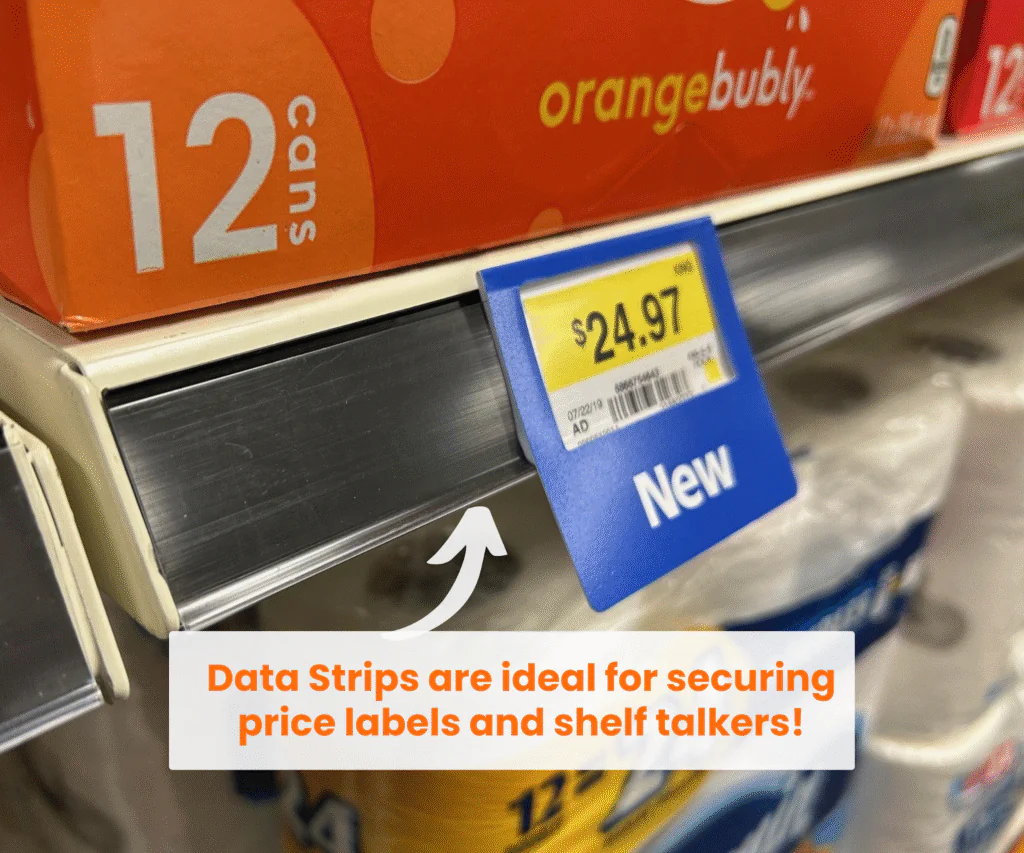
At their core, shelf data strips create a dedicated channel at the shelf edge. That channel gives pricing, product information, and shelf talkers a permanent, predictable home.
Without that structure, teams improvise. Tape goes on. Paper gets tucked under lips of shelves. Tags drift slightly left or right during cleaning or restocking. Individually, those issues seem minor. Collectively, they create visual noise and constant rework.
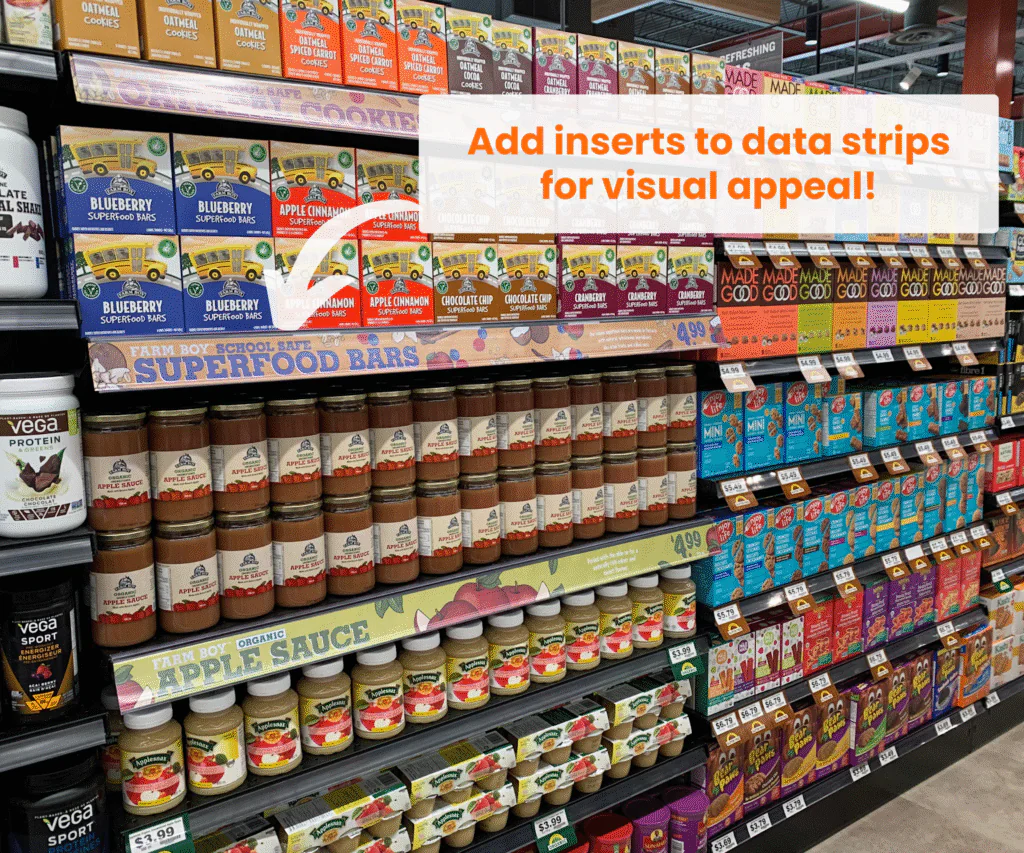
A data strip replaces improvisation with consistency. Inserts slide in and out cleanly. Labels stay aligned from the first aisle to the last. The shelf edge looks finished all day, not just right after a reset.
This matters because shelf edges are where decisions happen. When pricing and product information are easy to scan, shoppers move faster. When they’re misaligned or damaged, hesitation creeps in—and hesitation slows conversion.
Data Strips vs. ESL Rails: Solving Two Different Problems
It’s tempting to lump data strips and ESL rails together. They are both part of shelf-edge organization.
Data strips are designed for printed inserts. They’re ideal when your team changes pricing weekly, runs frequent promotions, or uses shelf talkers to highlight features or offers. The priority here is speed and flexibility. Inserts need to slide in and out without adhesive, trimming, or alignment guesswork.
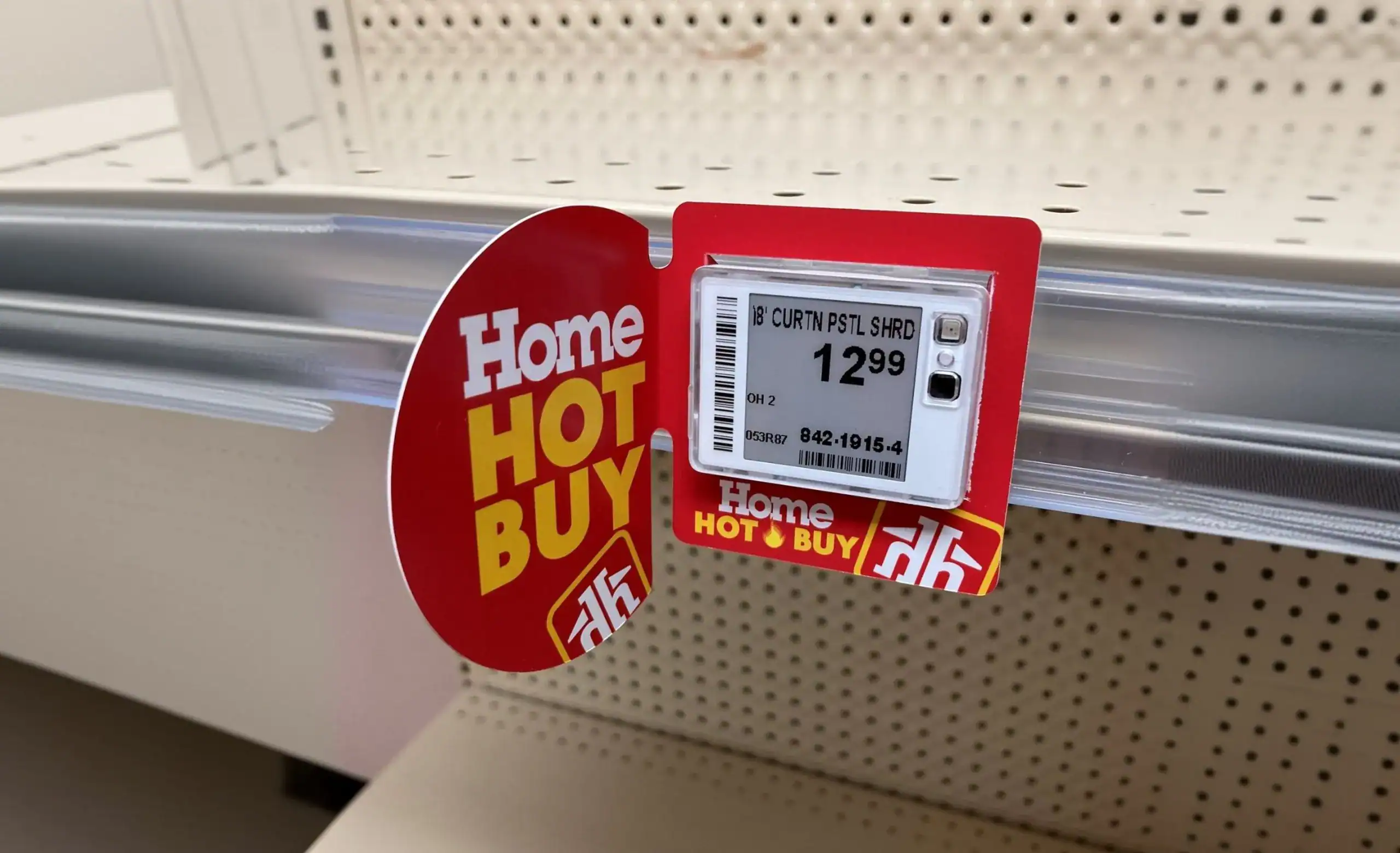
ESL rails, on the other hand, are engineered to hold electronic shelf labels and shelf talkers. ESL devices are heavier, more expensive, and more vulnerable to damage from carts, pallets, and foot traffic. The rail’s job is to lock them in place and keep them protected—especially in high-traffic zones.
When Data Strips Work Best
Data strips shine in environments where change is constant.
If your store runs weekly promotions, seasonal campaigns, or frequent price adjustments, data strips reduce each change to a simple motion: slide out the old insert, slide in the new one. No tape. No residue. No crooked tags that need to be fixed later.
They also adapt well across different fixture types. Standard shelves, peg hooks, and baskets can all use compatible profiles, which helps maintain a consistent labeling standard even as displays change. That consistency matters more than most teams realize. When shelf edges behave the same way everywhere, resets get faster and errors drop.
When ESL Rails Are the Right Call
If you’re running electronic shelf labels, ESL rails aren’t optional—they’re foundational.
These rails are built to secure digital units firmly, reducing loss from bumps, carts, and everyday wear. In busy aisles, that protection prevents cracked screens and broken housings that quickly turn into replacement costs.
Protective shields add another layer of durability. They absorb impacts that would otherwise hit the device directly. Over time, that protection keeps systems running consistently and avoids the slow creep of “temporary fixes” that never quite look right.
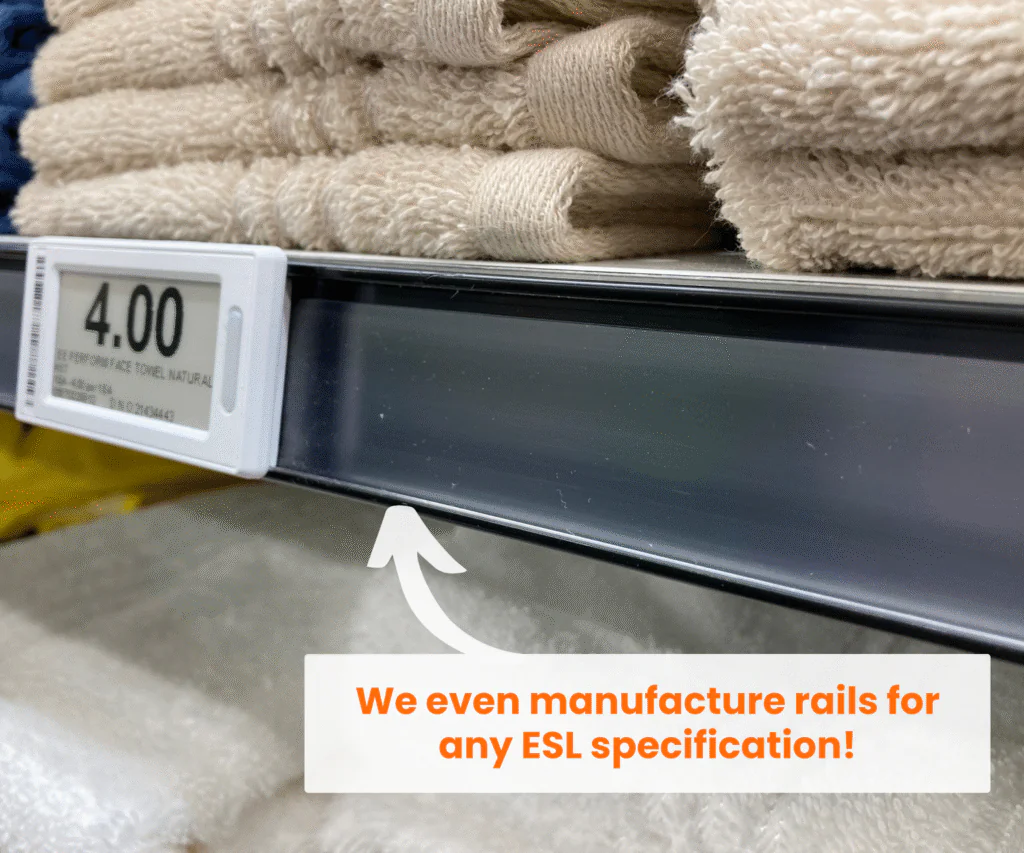
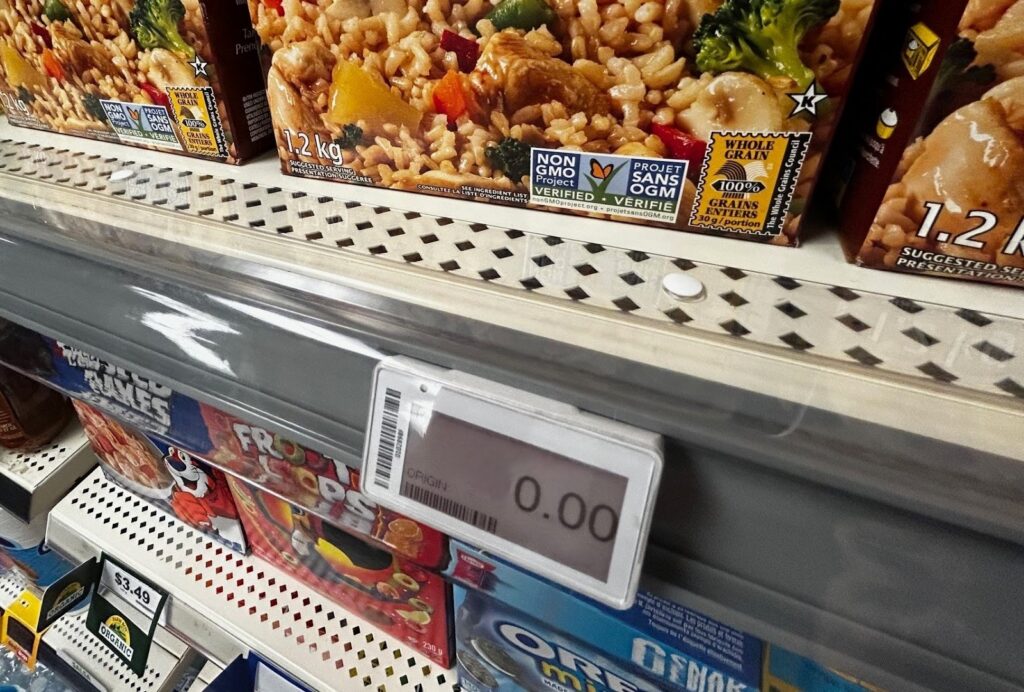
Photos: ESL Rail and ESL Rail with Protection Shield
The Real Speed Benefits During Price Changes and Promos on Data Strips
The biggest efficiency gains from shelf-edge systems don’t show up in theory. They show up during resets.
When labels insert into a data strip channel instead of being taped individually, the time savings compound fast. A task that takes 30 seconds instead of two minutes per shelf doesn’t just save time—it changes how teams plan their day. Across hundreds of SKUs and multiple locations, those seconds turn into hours.
Promo changes become cleaner, too. Old messaging comes out without residue. New inserts go in without trimming or re-taping. The shelf edge stays tidy even when timelines are tight.
Merchandising teams feel this most during aisle resets. Instead of fighting shelf edges, they focus on executing the planogram. Consistent placement across bays means pricing stays aligned, and sections don’t need to be redone because something “looks off.”
How Clear Pricing Builds Shopper Confidence
Clean, aligned shelf labels do more than look professional—they remove doubt.
When shoppers trust that the price on the shelf matches the product above it, they move forward. When they don’t, they stop, compare, and ask questions. Every pause is friction.
Clear pricing shortens the path from browsing to buying. It eliminates those “Is this right?” moments that quietly erode confidence. Over time, a consistent shelf edge signals accuracy and care, reinforcing trust not just in pricing, but in the store as a whole.
Choosing the Right Profile for Your Shelving Type
Not all shelves are created equal, and neither are shelf-edge profiles.
Matching the strip or rail to your shelf material, fixture type, and attachment method is what keeps installations clean over time. A profile that fits properly installs straight, stays secure, and doesn’t warp or peel under daily use.
Before choosing a profile, it helps to confirm:
– Shelf material: metal, wood, glass, or wire all behave differently
– Fixture type: standard shelves, peg hooks, or baskets need different solutions
– Attachment method: snap-on, adhesive, or clip-on options depend on your reset frequency
– Reset frequency: frequently moved shelves need profiles that reinstall without losing grip
Getting this right upfront prevents constant adjustment later.
Label Height, Visibility, and Protection
Efficiency isn’t just about holding labels—it’s about making them easy to read and hard to damage.
The right strip matches your insert height so labels don’t stick out awkwardly or disappear below the shelf edge. Clear strips work well in most environments, while coloured options can improve visibility or support brand standards in specific zones.
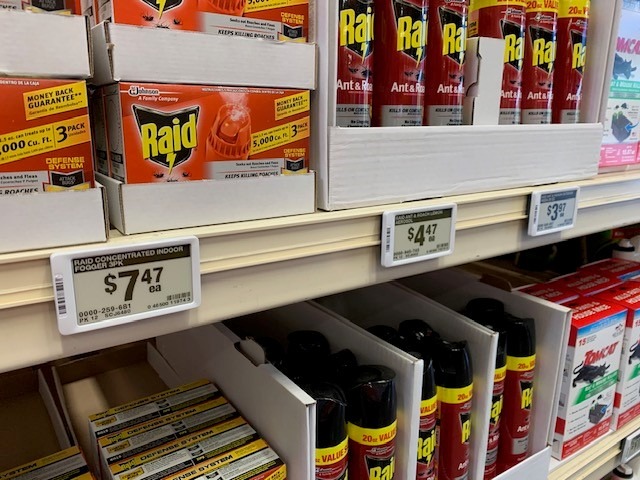
In high-impact areas, added protection matters. If carts and trolleys are a daily reality, shields prevent bent inserts and torn labels that would otherwise need frequent replacement.
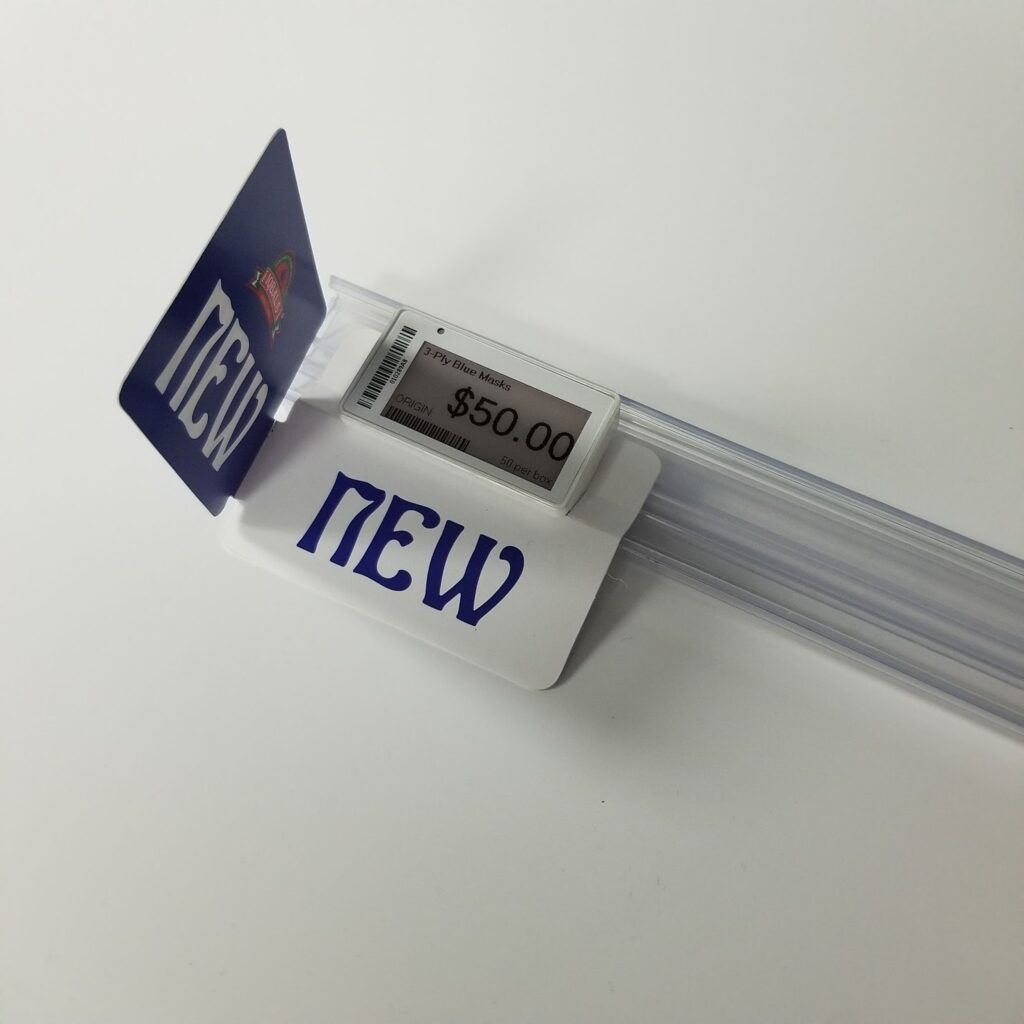
Photos: Clear and beige ESL rails
Common Installation Mistakes That Create Long-Term Problems
Most shelf-edge issues don’t start big. They start small—and repeat.
Poorly matched profiles cause alignment drift. Low-quality adhesive peels during cleaning or resets. Incorrect strip height lets inserts fall out or hide from view.
Each of these mistakes forces teams into constant correction mode. Time gets spent fixing instead of merchandising. Avoiding them comes down to choosing profiles designed for your exact shelf setup and confirming compatibility before installation.
Maintenance and Durability Over Time
In high-traffic zones, material quality matters.
Flimsy plastics crack under pressure. Durable materials withstand daily wear without splitting or fading. For ESL systems, protective shields significantly extend device life by absorbing impacts that would otherwise damage screens and housings.
Periodic inspections during resets help catch small issues early—before entire sections start to look inconsistent mid-shift.
Why Custom Fit and Colour Matter for Brand Consistency
A uniform shelf edge creates visual calm.
When different aisles use mismatched profiles or colours, the store feels fragmented. Custom-fit systems eliminate that “mix and match” look, ensuring consistent presentation across departments.
Colour matching supports brand standards and wayfinding, while custom engineering ensures clean installs on mixed fixture types—from standard shelving to specialty displays.
How Data Strips Support Planogram Execution
During planogram changes, the shelf edge is often the first place things fall apart. Consistent strip systems keep labels aligned, spacing predictable, and verification simple.
Managers can spot missing or incorrect pricing at a glance. Seasonal changeovers become insert swaps instead of full re-labeling projects. The shelf edge becomes a visual checkpoint for execution quality.
Why Dana Industries Builds Shelf-Edge Systems That Last
Dana Industries manufactures data strips, ESL rails, and protective shields in-house because fit and durability directly affect real-world performance.
By engineering profiles to match specific shelving systems and environments, installations go smoother and stay secure longer. That focus on fit prevents the rework, replacements, and visual inconsistency that generic solutions create.
The goal isn’t just clean shelves today—it’s a system that keeps every label change clean, quick, and repeatable tomorrow.