Grocery shelf merchandising and store signage help retailers win shoppers by keeping products visible, available, and easy to find while delivering useful messages at the point of purchase. Shelf pushers maintain product facings and on-shelf availability, while shelf talkers, aisle blades, and other grocery store signage guide shoppers toward products, promotions, and information.
According to FMI – The Food Industry Association, the average American household visits 5.4 separate grocery banners per month, with Gen Z and Millennial shoppers visiting as many as 6.7 and 6.1 banners, respectively. ¹ In a market where shoppers compare freshness, price, and convenience at every stop, tools like merchandising pushers, clear aisle navigation, and targeted shelf messaging are what turn casual visitors into repeat buyers.
The modern grocery shopper is rarely loyal to a single store. Today’s customers move fluidly between banners, picking up fresh produce at one retailer, stocking up on private label products at another, and grabbing a quick online order at a third. Each visit becomes a silent comparison of freshness, price, product availability, and how easy the store makes their trip.
That shifting behaviour raises the stakes for grocery retailers across North America. When shoppers can defect after a single disappointing visit, every touchpoint matters. Empty shelves, confusing layouts, and generic promotions quietly push customers toward the competition. Meanwhile, the retailers who nail the in-store experience turn casual visitors into repeat buyers.
The right shelf merchandising solutions do more than tidy up a shelf. They shape how customers perceive quality, support product visibility and planogram execution, guide their journey through the store, and reinforce the value of every dollar spent.
Below, we’ll explore how grocery shelf merchandising and store signage help retailers meet rising customer expectations, along with the specific products making it happen.
How Does Grocery Shelf Merchandising Build Perceived Value Across the Aisle?
Grocery retailers build perceived value by keeping aisles looking full, orderly, and abundant throughout the day, which signals freshness and quality to shoppers. Automated grocery shelf merchandising systems make this possible without constant manual restocking.
Keeping the aisles looking full and orderly throughout a busy day is a challenge. As customers pull products from the front of a shelf, gaps appear quickly. A half-empty display suggests neglect, or signals that the best items are already gone.
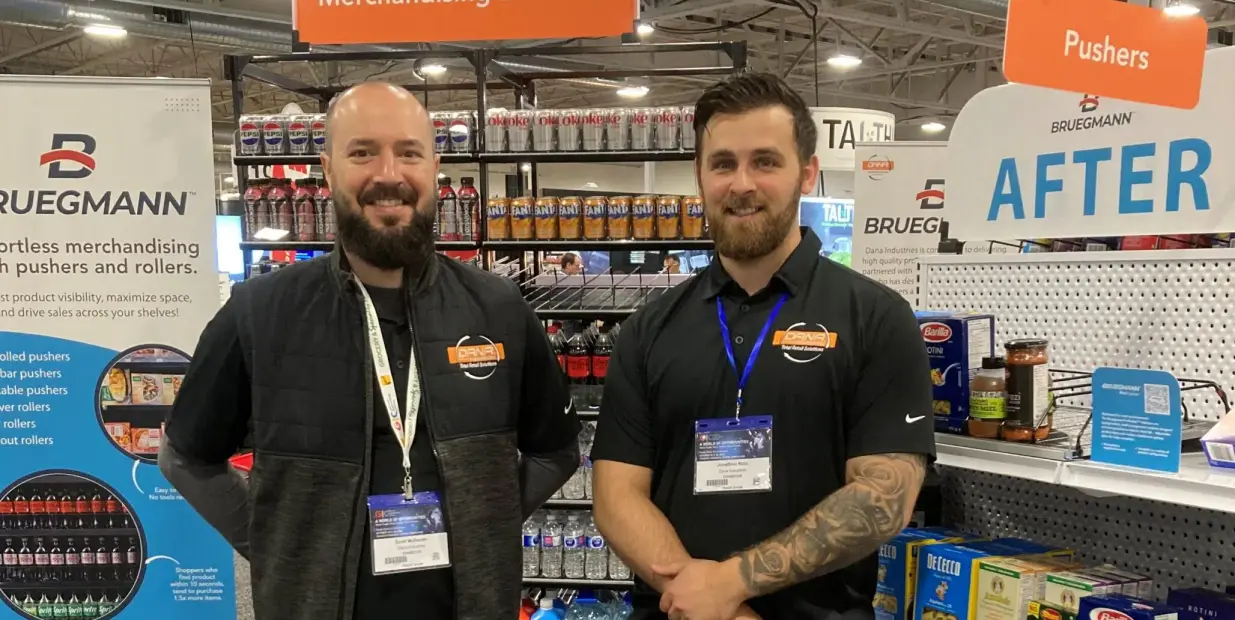
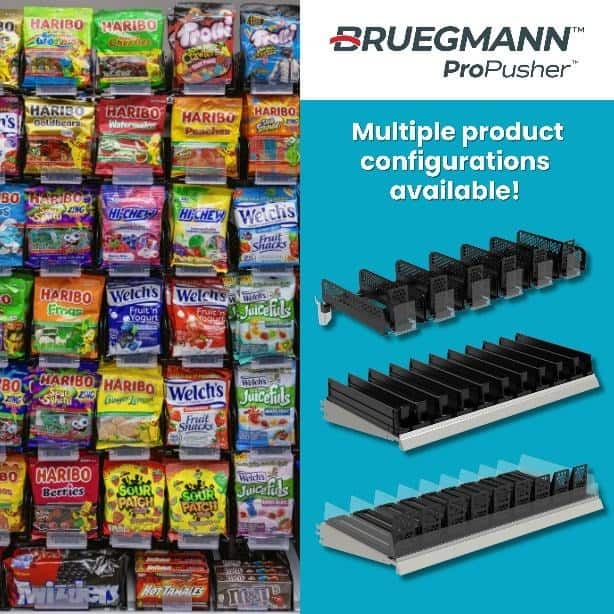
Automated merchandising systems solve this quietly and effectively. Our Bruegmann ProPusher™ shelf pushers keep products gliding forward to the front of the shelf, so pantry items and grab-and-go items always face the customer.
The result is a display that looks consistently organized without staff constantly restocking by hand.
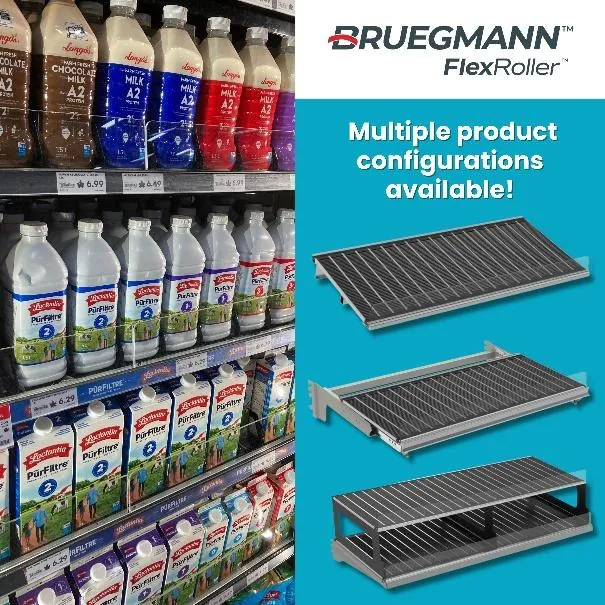
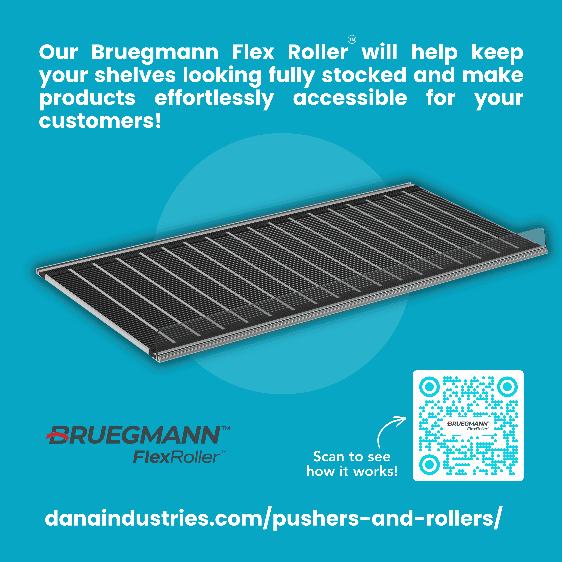
For rounded or heavy items, our Bruegmann FlexRoller™ helps keep everything aligned and forward-facing, maintaining a curated, abundant look. The roller-based system can support automatic product fronting in ambient and cold environments while helping stores organize available shelf space.
Private label products can benefit especially from strong merchandising. Store brands now account for a significant share of grocery sales, and a well-organized private label section reinforces its value proposition.
How Do Shelf Pushers Improve On-Shelf Availability and Reduce Perceived Stockouts?
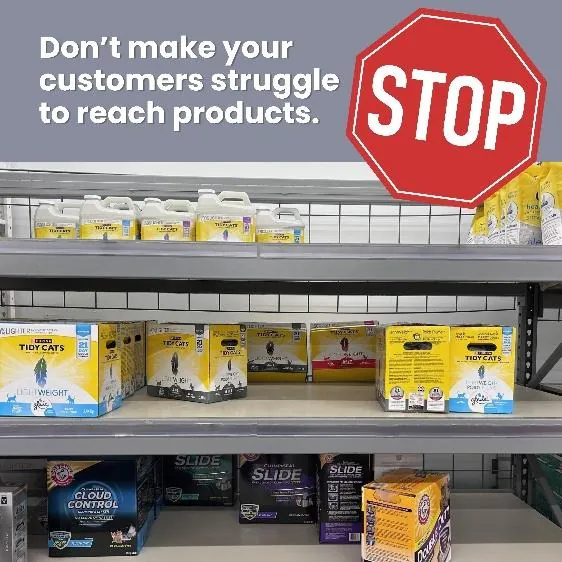
Shelf pushers improve on-shelf availability by keeping the remaining inventory visible and accessible at the front of the shelf. A product can technically still be in stock while appearing unavailable to the shopper when units are hidden at the back of a deep shelf.
Few things frustrate a shopper more than having difficulty finding a product. A customer who can’t find their regular item may finish their entire list at a competitor next time.
The USDA estimates that over one-third of all available food in the United States goes uneaten through loss or waste at the retail and consumer levels, ² which points to the broader cost of poor inventory and shelf management throughout the supply chain.
The problem is often visibility. Staff can’t easily restock when product is low and shelves empty fast. Deep shelves make it worse, with products pushed to the back becoming invisible or difficult to reach without climbing on the shelves.
Bruegmann™ shelf management solutions tackle this directly. The ProPusher™ and FlexRoller™ systems continuously advance products forward, which means the last few units never get stranded at the back of a deep shelf.
Every item stays visible and reachable. This constant forward motion also makes low-stock situations obvious at a glance, so associates can restock before a gap ever forms.
The payoff is real. On-shelf availability directly affects revenue and loyalty. When customers consistently find what they need, they keep coming back.
Merchandising systems that maintain full facings turn a reactive restocking chore into a proactive, always-ready display.
How Does Shelf Merchandising Support Planogram Compliance?
Shelf merchandising supports planogram compliance by helping products remain in defined lanes, maintaining facings, and keeping each SKU closer to its intended shelf position throughout the day.
Even a correctly executed planogram can deteriorate after hours of shopper activity. Packages move into neighbouring facings, items fall backward, and fast-moving SKUs create visible gaps.
Pushers, rollers, and adjustable product lanes help maintain a more consistent shelf between resets. For grocery retailers managing thousands of SKUs, this connects the merchandising plan with what the shopper actually sees in the aisle.
How Can Grocery Store Signage Target Shoppers at the Point of Purchase?
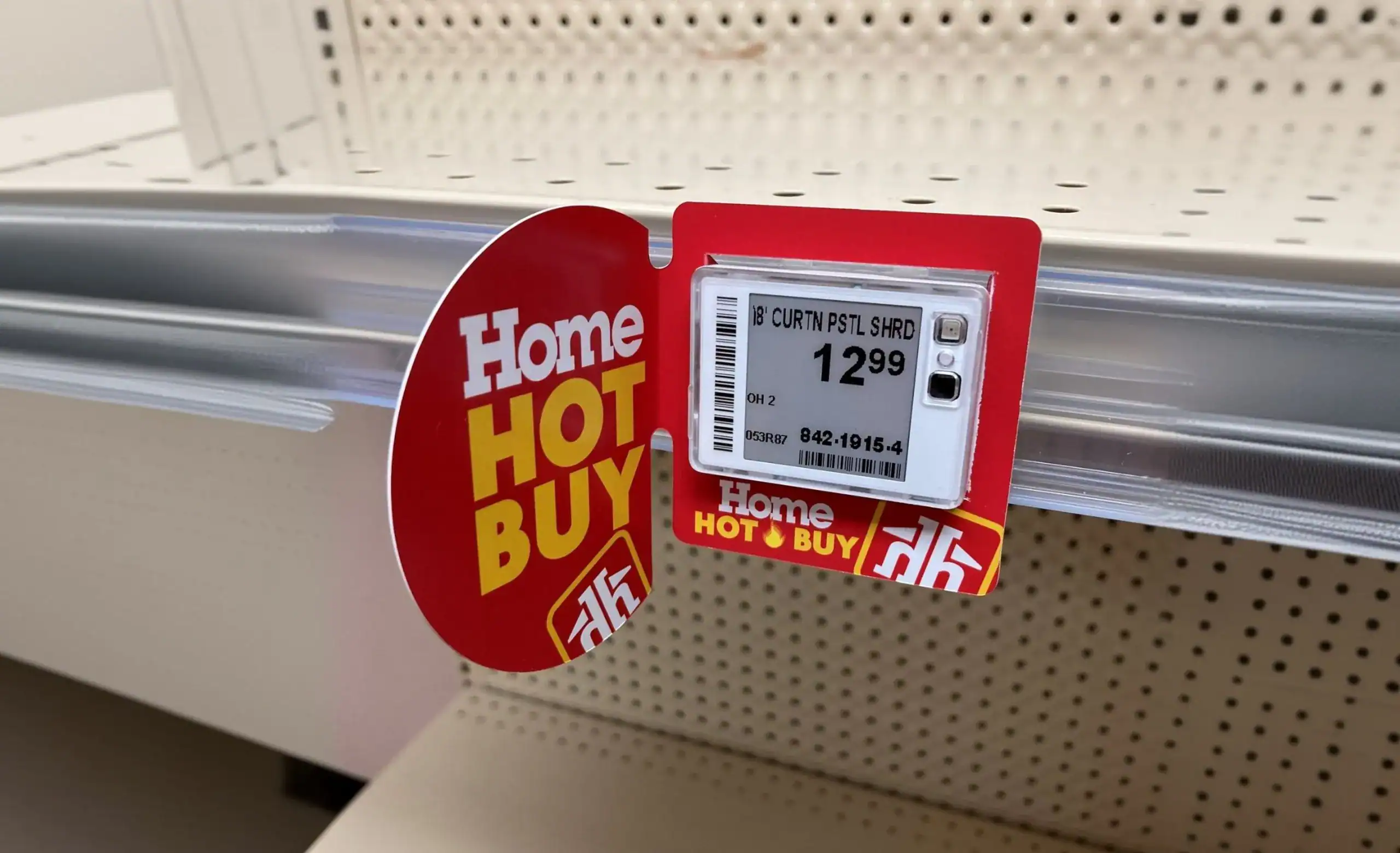
Grocery store signage delivers targeted messaging by placing relevant information at the shelf edge, right where customers decide what to buy. Tools like shelf talkers, the iQtalkers®, and aisle blades can segment messaging by category, season, promotion, or shopper mission.
Personalization isn’t only a digital tactic. While online retailers tailor recommendations through algorithms, physical stores can create their own version of relevant, timely messaging right at the shelf edge.
FMI research shows that 77% of grocery shoppers use digital technology before they shop, and 71% use it while shopping, ¹ which means in-store signage needs to connect with the digital experience shoppers bring through the door.
Static, generic signs are easy to ignore. Shoppers tune out clutter.
Effective point-of-purchase signage means delivering the right message, in the right place, at the moment a customer is deciding what to buy.
Shelf Talkers Put Product Messages Where Decisions Happen
Shelf talkers are one of the most powerful tools for this.
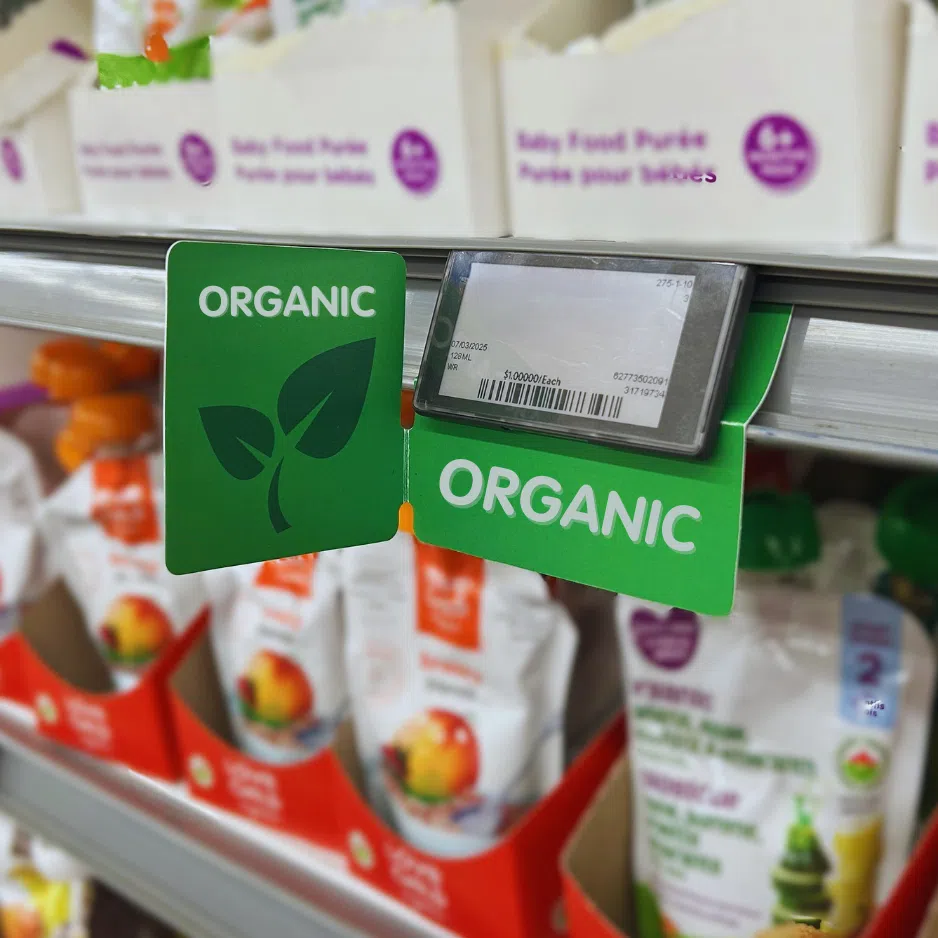
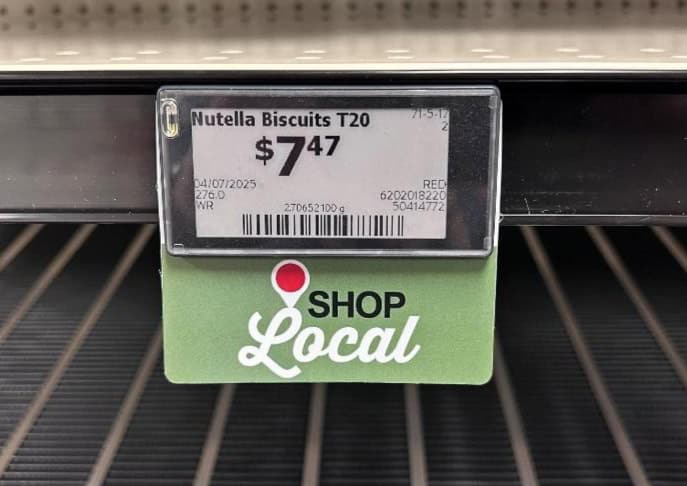
These small, attention-grabbing signs extend from the shelf to highlight a promotion, a locally made product, new products, private label value, or a dietary callout like gluten-free or locally sourced.
Placed strategically, they speak directly to shopper priorities without overwhelming the aisle. A well-timed shelf talker can turn a browser into a buyer at the exact point of decision.
The iQtalkers® Connects the Physical Shelf to Digital Content
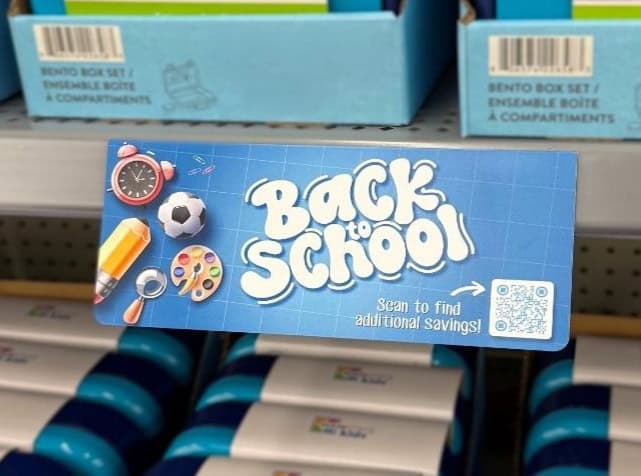
The iQtalkers® takes shelf-edge messaging a step further by adding a QR code that shoppers can scan for additional information.
Whether it’s a recipe, a loyalty reward, promotion, product story, or nutritional callout, the iQtalkers® provides relevant information right where shoppers are looking.
That connection matters as the grocery journey becomes increasingly digital. The physical shelf can act as the starting point for more detailed information without requiring every message to fit on one printed sign.
Aisle Blades Improve Wayfinding and Promotional Visibility
Aisle blades can help highlight promotions, categories, products, and services farther down the aisle.
They help shoppers find what they need fast, reducing frustration and freeing them to explore.
When customers spend less time hunting, they spend more time discovering, and a smoother path through the store makes the whole trip feel more intuitive.
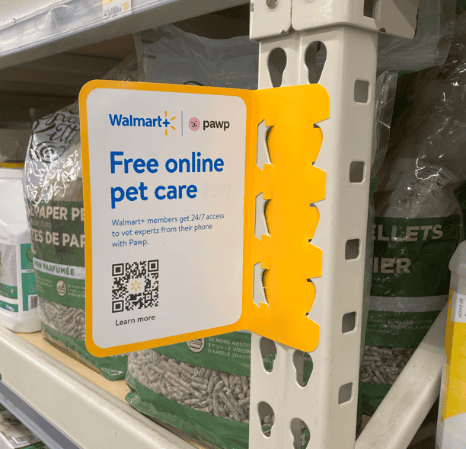
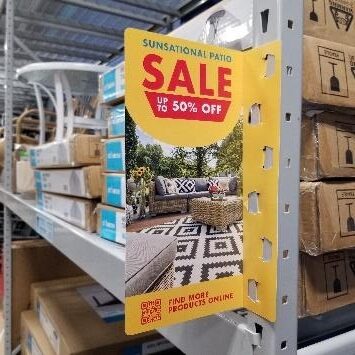
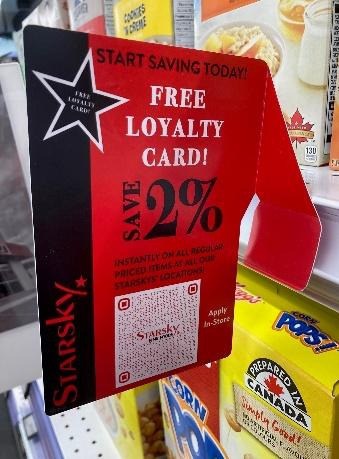
Together, these tools let retailers segment messaging by category, season, or shopper mission. A pet-focused endcap, a promotional callout, a local-product message, or a loyalty CTA can each support the customer experience.
How Do Merchandising and Store Signage Work Together?
The strongest retail merchandising strategy connects shelf condition with shelf communication.
A customer should be able to see the product, understand what it is, identify the price or promotion, and reach it without unnecessary friction.
Automated pushers like ProPusher™ and FlexRoller™ help maintain product visibility and make low-stock facings easier to identify. Shelf talkers, the iQtalkers®, and aisle blades guide and personalize the journey.
Retailers can also use data strips and ESL rails to organize price labels, electronic shelf labels, and compatible shelf signage directly beneath the products they describe.
Together, these systems create a more complete shelf: products stay front-facing, pricing and messaging remain organized, and shoppers can navigate the aisle with less friction.
At Dana Industries, we’ve focused on solving in-aisle challenges since 1993. The retailers who invest in these details create a store that feels more available, organized, and easier to shop—and those are the details shoppers compare each time they visit another grocery banner.
Frequently Asked Questions
What Are Pushers and How Do They Help Grocery Stores?
Pushers are spring-loaded systems that automatically glide products forward to the front of the shelf as items are removed.
Products like the Bruegmann ProPusher™ keep displays looking full, improve product visibility, and reduce the appearance of stockouts. This helps stores maintain an abundant, well-organized look with less manual fronting.
FlexRoller™ uses a roller-based system to provide automatic fronting for a range of product types.
What’s the Difference Between Aisle Blades and Shelf Talkers?
Aisle blades are projecting signs that mark aisle promotions and categories to help shoppers navigate the store at a glance.
Shelf talkers are smaller signs that extend from the shelf edge to highlight specific promotions, new products, or product callouts.
The iQtalkers® is a specific shelf talker solution with a QR code for easy access to additional online information about the product.
How Do Merchandising Solutions Reduce Stockouts?
Merchandising solutions like automated pushers keep products advancing toward the front of the shelf, so stock never gets stranded at the back where it looks sold out.
This constant forward motion keeps every item visible and makes low-stock situations easier to identify, allowing staff to restock proactively before gaps form.
Are Shelf Merchandising Systems Worth the Investment for Smaller Grocery Banners?
Shelf merchandising systems are well suited to grocery banners of any size that want to reduce manual fronting labor and maintain consistent on-shelf availability.
Smaller banners benefit when staff time is limited, since automated systems like ProPusher™ and FlexRoller™ keep facings full without constant hands-on attention, while larger banners gain from consistency across many aisles, departments, and locations.
Sources
¹ FMI – The Food Industry Association, U.S. Grocery Shopper Trends 2026. Published May 2026. Research covers grocery banner usage, the evolving physical store experience, and shoppers’ use of digital technology before and during grocery trips.
² United States Department of Agriculture, Economic Research Service, The Estimated Amount, Value, and Calories of Postharvest Food Losses at the Retail and Consumer Levels in the United States. USDA estimates that 31% of the available food supply at the retail and consumer levels went uneaten in 2010, representing approximately 133 billion pounds and $161.6 billion in retail value.